Inside the Mechanics: Symbol Clustering and Its Role in Mobile Progressive Wins
Written by Mara Otto · May 26, 2026
Inside the Mechanics: Symbol Clustering and Its Role in Mobile Progressive Wins
Understanding Symbol Clustering Basics
Symbol clustering operates as a core mechanic in many contemporary slot designs where identical icons group together across adjacent positions to generate winning combinations instead of relying solely on fixed paylines and this approach creates dynamic patterns that adapt to each spin outcome. Mobile platforms amplify these mechanics because touch-enabled screens allow players to observe cluster formations in real time with high-resolution graphics rendering multiple symbol interactions simultaneously while the game processes outcomes in the background. Progressive jackpot systems integrate with clustering when specific cluster sizes or configurations meet threshold requirements that contribute to the growing prize pool and data from industry reports indicates that such combined features appear more frequently in titles released through 2026.
Developers program clustering algorithms to evaluate symbol adjacency in grids that range from five-by-five layouts to larger configurations and these systems calculate wins by counting connected groups rather than linear alignments. On mobile devices the reduced screen real estate demands optimized rendering so clusters highlight through animations that guide attention without overwhelming the interface and this technical adaptation supports seamless play across varying connection speeds.
How Clustering Triggers Progressive Elements
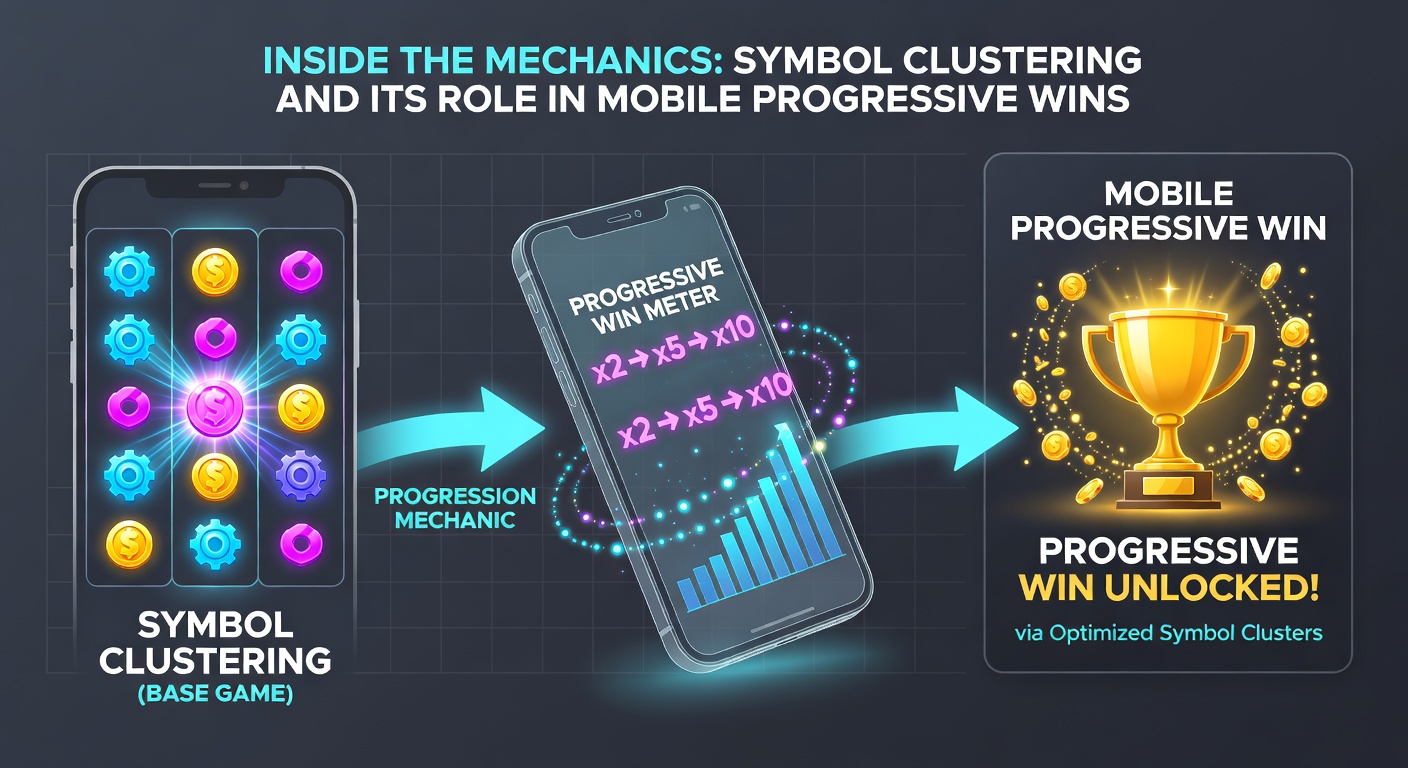
Progressive wins build through contributions from every qualifying bet across networked games and symbol clusters accelerate this process when they exceed standard payout thresholds because certain oversized groupings feed directly into jackpot meters. Observers note that mobile implementations often include visual meters that update instantly after a cluster resolves allowing players to track incremental growth during sessions. Research from the American Gaming Association shows mobile progressive slots account for a rising share of overall handle in regulated markets as clustering mechanics sustain engagement through frequent smaller wins that occasionally escalate to major prizes.
The interaction works because game logic evaluates every cluster for both immediate rewards and secondary contributions to the progressive pool with multipliers sometimes applied when clusters reach maximum size on a single spin. In practice this means a mobile user completing a large cluster may see both a base payout and an addition to the shared jackpot which then becomes available to participants across connected platforms.
Mobile-Specific Implementation Challenges
Screen dimensions on smartphones require developers to compress grid layouts while preserving cluster visibility and this leads to refined touch controls that let users zoom or rotate views during bonus rounds triggered by clusters. Battery and processing constraints further influence design choices so clustering animations remain lightweight yet informative and industry figures reveal that optimized mobile versions maintain higher retention rates compared with desktop equivalents in several jurisdictions. Those who analyze player data across regions observe that clustering combined with progressive elements performs consistently in markets such as parts of North America and Australia where regulatory frameworks support rapid content updates.
Network latency presents another variable because mobile connections fluctuate yet clustering evaluations occur server-side to ensure fairness and the results transmit back to the device within milliseconds so players experience uninterrupted sequences. This architecture supports cross-device continuity where a session started on a phone can resume on a tablet without resetting progressive contributions.
Integration with 2026 Content Trends
Throughout May 2026 several new mobile titles incorporate advanced clustering that ties more explicitly to progressive triggers and these releases build on established patterns while introducing variable cluster shapes that adapt based on bet size. Market monitoring from sources including the Ontario Lottery and Gaming Corporation indicates steady growth in mobile progressive handle during the same period with clustering features cited as a contributing factor in player activity logs. The mechanics allow for hybrid systems where standard clusters deliver regular payouts and rare mega-clusters directly award or advance toward the progressive top prize and this layered structure appears in titles distributed across multiple operators.
Geographic variation affects adoption because certain regulators require transparent disclosure of how clusters influence jackpot odds and developers respond by embedding explanatory panels within the game interface itself. Such transparency measures help maintain compliance while preserving the engaging flow of cluster-based gameplay on portable devices.
Technical Evaluation and Outcome Calculation
Behind every spin the clustering engine scans the grid using flood-fill or adjacency algorithms to identify valid groups and then cross-references those groups against paytables that include progressive escalators. Mobile optimization ensures these calculations complete quickly enough to support rapid spin rates without compromising accuracy and testing protocols from independent laboratories verify that outcomes remain random regardless of cluster complexity. When a progressive-eligible cluster forms the system allocates a percentage of the wager to the pool while simultaneously awarding the base win and this dual processing occurs transparently so players receive both immediate feedback and long-term contribution records.
Updates in 2026 have refined these systems further by allowing clusters to chain across multiple evaluation passes which increases the frequency of progressive contributions without altering the underlying randomness certified by oversight bodies.
Conclusion
Symbol clustering continues to shape mobile progressive slot design through its capacity to generate varied win patterns that feed shared jackpot systems and the mechanics function reliably across devices when supported by efficient code and regulatory standards. As platforms evolve the integration of clustering with progressive elements remains a measurable driver of activity according to aggregated industry data and the approach shows no sign of diminishing relevance in upcoming releases. Players encounter these systems through intuitive mobile interfaces that balance visual clarity with rapid outcome resolution while preserving the core mathematics that govern fair play worldwide.