How Variations in Bonus Structures Shape Player Movement from Free Play to Real Stakes in Reel Games
Written by Theo Lehmann · Aug 31, 2026

How Variations in Bonus Structures Shape Player Movement from Free Play to Real Stakes in Reel Games
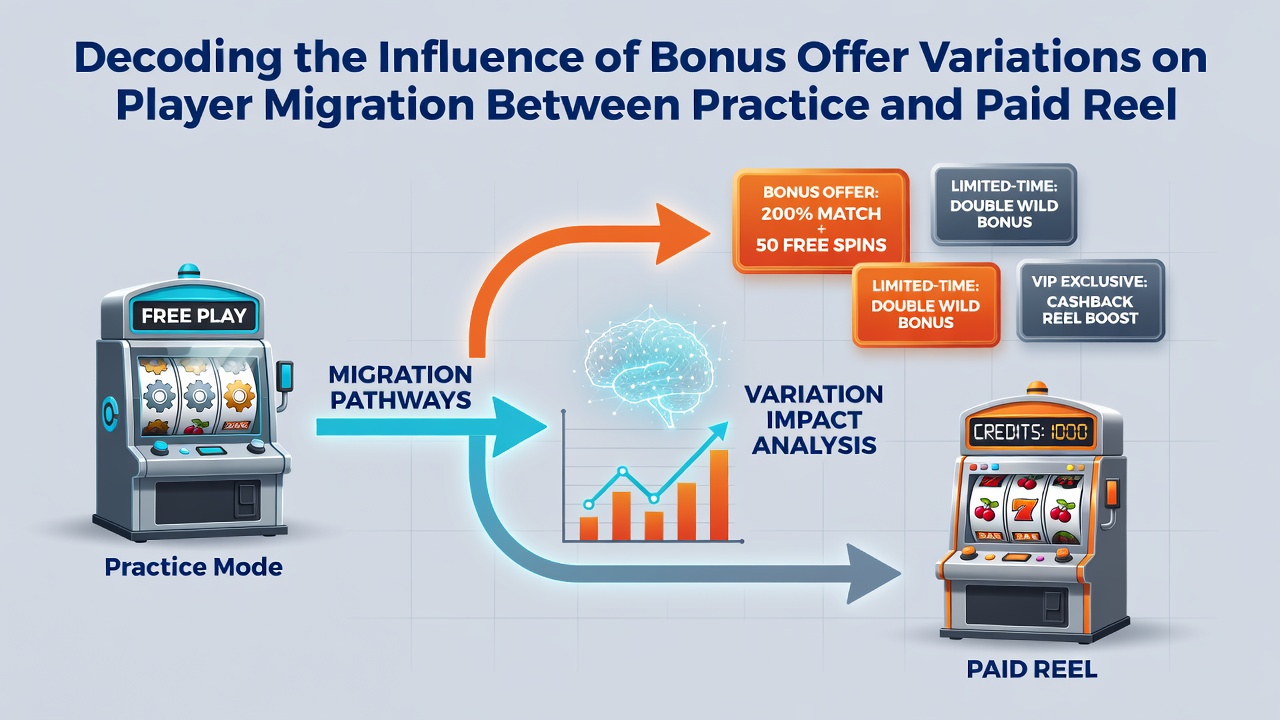
Bonus offers in digital reel platforms come in multiple forms including welcome packages, free spin allocations, deposit matches, and loyalty incentives, and these elements create measurable effects on how players shift between practice modes and funded accounts. Data collected across multiple jurisdictions shows that players who receive no-deposit bonuses in demo environments complete the migration to real-money play at higher rates than those exposed only to standard match offers, while those who studied these patterns note that the timing and value of the bonus directly correlates with session length before conversion occurs.
Core Mechanics of Bonus Offer Types and Their Reach
Practice rounds allow users to explore reel mechanics without financial commitment, yet the introduction of a bonus code or triggered reward often serves as the bridge that encourages account funding. Research indicates that percentage-based deposit bonuses tend to retain players who already hold accounts but show weaker pull for complete newcomers, whereas fixed free spin bundles delivered immediately after registration produce quicker transitions to paid sessions. Observers note that cashback structures applied to practice losses create a different dynamic because they reduce perceived risk, prompting users to test paid reels sooner than they otherwise would.
Platform operators track these movements through unique player identifiers that link demo activity to subsequent deposits, and figures reveal consistent regional differences. In markets where regulatory frameworks require clear separation between practice and paid environments, bonus redemption rates after demo exposure sit at lower levels than in regions with fewer restrictions, yet overall migration volume remains steady when bonus values exceed a certain threshold relative to minimum deposit amounts.
Player Behavior Patterns Across Demo and Funded Environments
Those who examined account-level data found that players spending extended time in practice reels before encountering a bonus display lower immediate migration rates, but the same group shows elevated retention once they do fund an account. Conversely, individuals who receive bonus prompts within the first three practice sessions migrate faster, although their average deposit sizes tend to be smaller. This distinction matters because operators adjust bonus sizing based on observed conversion velocity rather than total volume alone.
August 2026 reports from multiple operators highlighted seasonal spikes in migration following summer promotional campaigns that layered extra free spins onto existing welcome structures. The added layers produced a measurable uptick in first-time deposits among users who had previously remained in practice modes for several weeks, suggesting that cumulative bonus value influences timing more than any single component.
Regional Regulatory Contexts and Data Collection Methods
Authorities in different regions maintain distinct reporting requirements that affect how bonus-driven migration appears in public statistics. The New Jersey Division of Gaming Enforcement publishes aggregated figures on player account creation and funding, and these datasets allow researchers to correlate bonus campaigns with deposit timing. Similar transparency exists through the International Association of Gaming Regulators, whose members compile cross-border comparisons that isolate the impact of bonus variations on practice-to-paid shifts.
Academic analyses of these datasets consistently find that bonus caps and wagering requirements alter migration speed. When wagering multipliers exceed 30 times the bonus amount, conversion rates from demo play drop noticeably, whereas multipliers below 20 times maintain steadier movement into paid reels. Platform logs further indicate that players who complete practice sessions with bonus funds active spend more time reviewing paytable information before depositing, which correlates with slightly higher first-deposit values once the transition occurs.
Technical Tracking and Measurement Approaches
Modern analytics suites record every interaction between practice reels and bonus activation events, then map those events against subsequent funding timestamps. This granular view reveals that mobile users respond differently to bonus variations than desktop users, with mobile practice sessions converting at higher rates when free spin offers arrive via push notification rather than in-app banners. Desktop users show stronger responses to deposit-match percentages delivered through email sequences after several practice rounds.
Segmented analysis by game type also surfaces patterns. Players practicing high-volatility reels migrate more readily under bonus structures that include loss rebates, while low-volatility reel enthusiasts respond better to extended free spin durations. These distinctions guide operators when they allocate bonus budgets across different reel portfolios and user cohorts.
Conclusion
Bonus offer variations exert measurable influence on the rate and timing of player movement from practice reels to paid experiences, and the specific form of each offer interacts with player history, device type, and regulatory environment. Continued collection of account-level data across jurisdictions will refine understanding of which combinations produce the most consistent migration without inflating short-term deposit volumes at the expense of longer-term retention.