How Layered Multipliers Influence Player Retention in Mobile Casino Interfaces
Written by Gisela Washington · Aug 23, 2026

How Layered Multipliers Influence Player Retention in Mobile Casino Interfaces
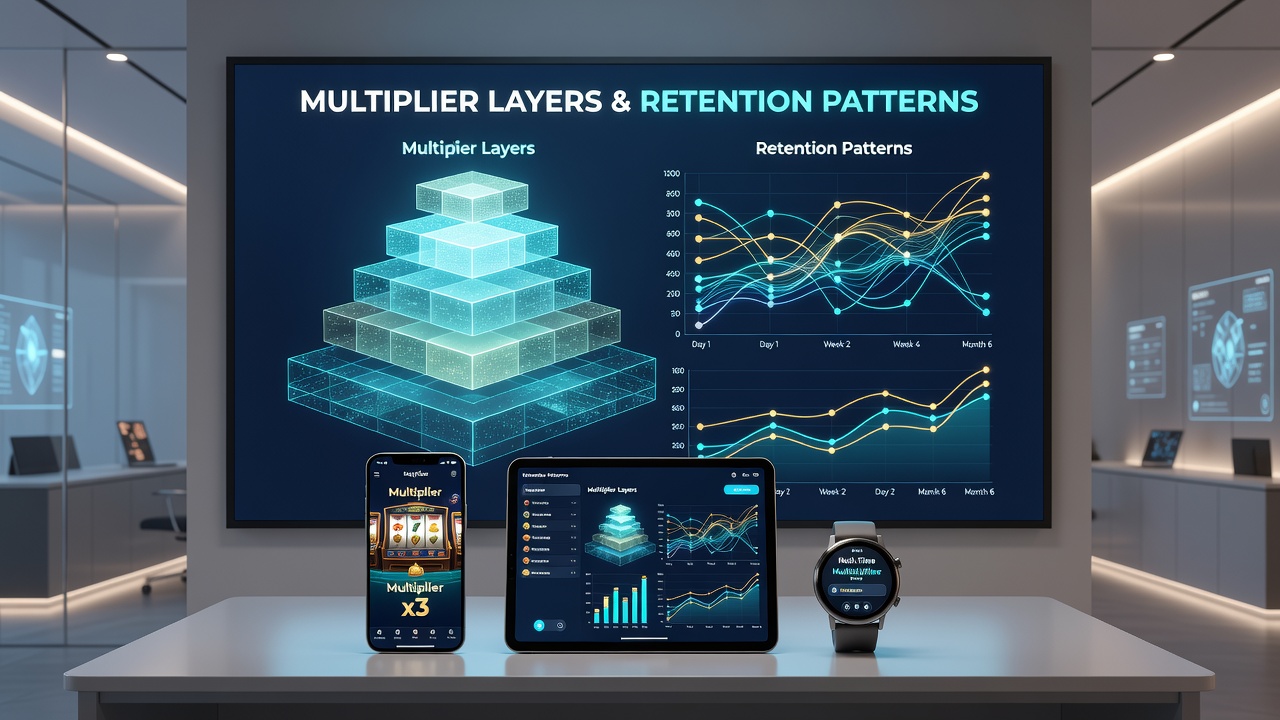
Layered multipliers appear in many mobile casino games as stacked mechanics that multiply wins across successive spins or bonus rounds, and these features connect directly to measurable shifts in how players stay engaged on handheld devices. Research from industry tracking platforms shows that games incorporating three or more multiplier tiers often record session durations extending 25 to 40 percent beyond titles without such layers, while data collected through August 2026 indicates consistent patterns across both iOS and Android user bases.
Mechanics Behind Stacked Multiplier Systems
Portable interfaces display multipliers through visual progress bars or expanding symbols that build value as reels continue to spin, and developers integrate these elements so each layer activates only after specific trigger conditions such as consecutive wins or collected tokens. One common structure uses base multipliers starting at x2, then escalates to x5 and x10 when additional symbols land, creating cumulative effects that players track through on-screen counters. Observers note that this progression keeps the interface responsive even on smaller screens, since animations load quickly and touch controls allow instant adjustments to bet sizes while layers accumulate.
Retention Data Across Device Types
Studies compiled by academic researchers at institutions focused on digital entertainment behaviors reveal that retention rates climb when multiplier layers reset partially rather than fully between sessions, allowing returning players to resume from their last achieved tier. Figures from portable platform analytics in mid-2026 demonstrate that users encountering layered systems complete an average of 18 percent more spins per session compared with flat multiplier designs, and this holds steady across tablets and smartphones alike. The pattern emerges because players adjust their pacing to chase the next threshold, which in turn extends time spent within the application before any natural exit point.
What's interesting is how these mechanics interact with battery and data constraints on mobile networks, since lighter animation loads for multiplier indicators reduce interruptions that might otherwise prompt users to close the app. Data collected through regional monitoring programs shows lower churn rates in markets where games emphasize gradual layer progression over sudden high-value jumps.
Player Migration and Engagement Patterns
Analysts tracking movement between practice and real-money modes find that layered multipliers encourage smoother transitions, as users first test the mechanics in free rounds and then carry familiarity into funded play where the same progression applies. A report released by the Australian Gambling Research Centre in August 2026 documented that titles featuring visible layer indicators retain 32 percent more players over a 30-day window than comparable games without them. Those who studied session logs across multiple operators observed that the effect strengthens when multipliers tie into daily login rewards, prompting repeat visits to build upon existing progress.
Yet retention does not rise uniformly, since certain player segments respond more to volatility within the layers themselves, while others prefer predictable step-ups that avoid large gaps between tiers. Platform operators adjust these variables by region, drawing on usage data from North American and European markets to fine-tune reset timers and display options.
Interface Design Factors That Support Layer Visibility
Design teams prioritize clear visual hierarchy so multiplier values remain readable during rapid reel spins, and this clarity correlates with sustained attention spans according to usability tests conducted on various screen sizes. Touch-friendly elements let players expand details about each layer without leaving the main game view, which minimizes friction that could interrupt flow. External measurements from the Nevada Gaming Control Board research archives indicate that interfaces balancing information density with simplicity achieve higher daily active user counts when multiplier systems are involved.
Developers continue to experiment with hybrid approaches that blend multiplier layers with other features such as expanding wilds or cascading reels, and early 2026 deployments show these combinations further stabilize retention curves across different demographic groups.
Conclusion
Layered multipliers function as structural elements that shape how engagement unfolds on portable casino platforms, with available data pointing to extended session lengths and improved return rates when progression remains visible and responsive. Patterns observed through 2026 highlight the role of gradual tier advancement in maintaining player momentum, while interface optimizations ensure these mechanics perform consistently across device variations. Continued monitoring by regulatory and research bodies will clarify how future adjustments to layer frequency and reset logic influence broader retention metrics in the mobile segment.