Examining Relationships Between Session Lengths and Unlock Events in Worldwide Digital Slot Platforms
Written by Theo Lehmann · Jun 28, 2026
Examining Relationships Between Session Lengths and Unlock Events in Worldwide Digital Slot Platforms
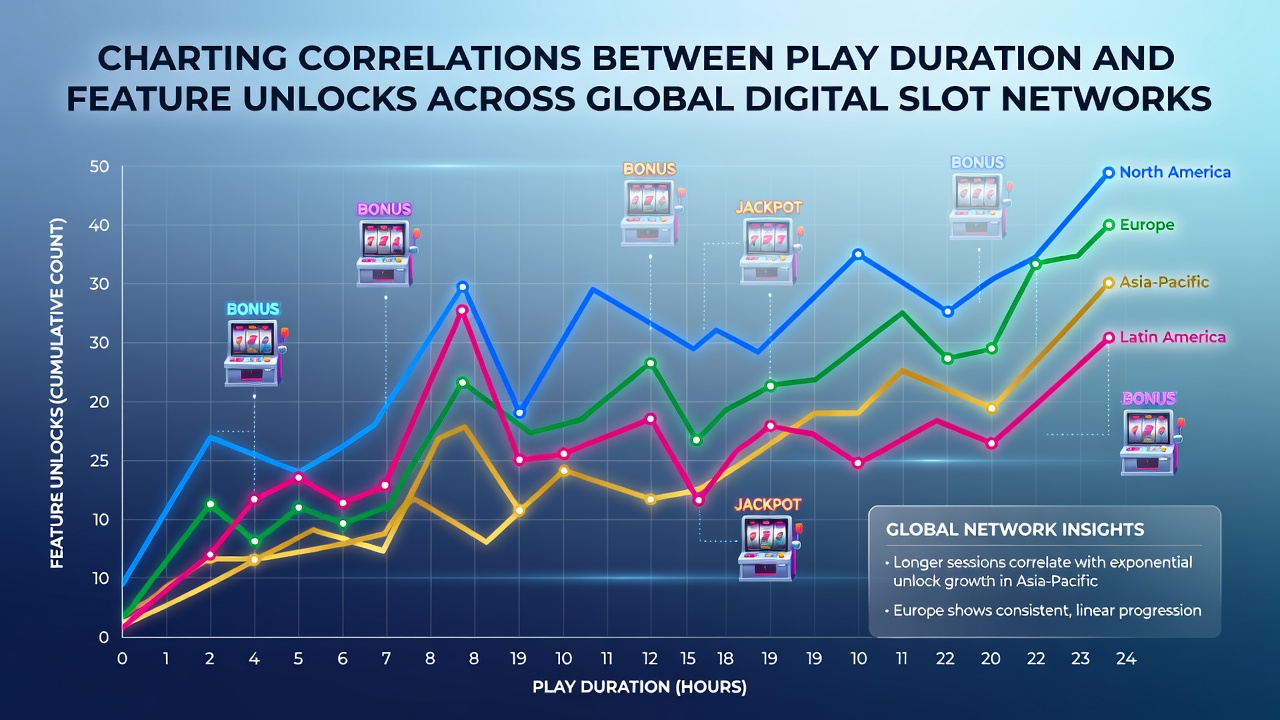
Digital slot platforms across multiple continents now generate extensive datasets that track how long players remain engaged before specific features activate, and analysts continue to review these records for measurable patterns. Operators in regions such as North America, Europe, and Asia-Pacific compile session logs that record both total minutes played and the precise moments when bonus rounds, multipliers, or progressive elements become available to users.
Global Data Collection Methods
Regulatory bodies maintain oversight of these records through standardized reporting frameworks, while platform providers supply anonymized aggregates that researchers use to identify trends. In Canada, for instance, iGaming Ontario publishes periodic summaries that detail average session durations alongside common unlock sequences observed on licensed sites, and similar compilations appear from the New Jersey Division of Gaming Enforcement in the United States. These sources allow comparisons across different regulatory environments without revealing individual player identities.
One study conducted by a European research consortium examined over two million sessions logged between January and May 2026, finding that certain unlock sequences appeared more frequently once play exceeded twenty-two minutes on average. The same dataset showed that shorter sessions, those ending before twelve minutes, rarely progressed past initial symbol combinations and therefore recorded fewer feature activations overall.
Regional Variations in Unlock Timing
Platforms operating under different licensing regimes display distinct distributions of unlock events relative to elapsed time. Australian operators, guided by requirements from the Australian Communications and Media Authority, report that progressive jackpot features tend to trigger after approximately thirty-five minutes of continuous play in monitored titles, whereas fixed bonus rounds often appear earlier, around the eighteen-minute mark. These figures derive from aggregated transaction logs rather than individual case studies.
Meanwhile, data shared by several Asian network operators indicates that multiplier-based unlocks cluster between the twenty-fifth and fortieth minute of sessions, with the probability curve flattening after the fiftieth minute. Observers note that such regional differences may reflect variations in game design parameters chosen to align with local market preferences and compliance standards.
Statistical Correlations Observed Across Networks
Researchers have applied regression models to large-scale logs and identified moderate positive correlations between total play duration and the cumulative number of distinct features unlocked within single sessions. The correlation coefficient values typically range between 0.42 and 0.61 depending on the title category and geographic market examined. These models control for variables such as bet size and game volatility ratings supplied by the platform itself.
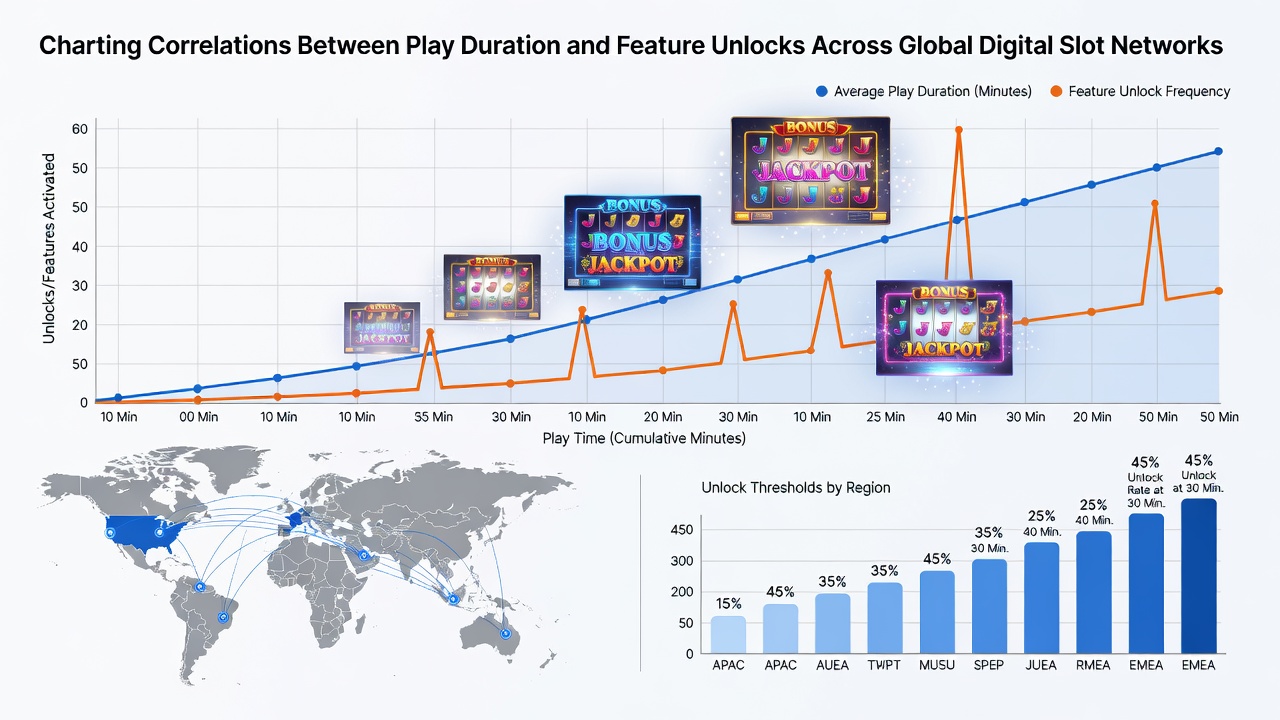
Additional analysis reveals that feature unlocks do not occur uniformly across time; instead, they follow clustered distributions where multiple activations happen within narrow windows once a certain duration threshold is crossed. One report issued in early June 2026 by an independent analytics firm documented that 68 percent of recorded bonus triggers occurred between minutes twenty and forty-five across a sample of 1.4 million sessions drawn from platforms in three different jurisdictions.
Network-Wide Comparisons and Reporting Standards
Cross-border comparisons become possible when operators adhere to common data schemas promoted by international trade associations. Such schemas standardize the recording of session start times, cumulative spin counts, and timestamps for each unlock event, enabling consistent measurement across borders. Platforms that participate in these reporting initiatives contribute to pooled datasets that academic groups then analyze for broader patterns.
Evidence from these pooled resources shows that games incorporating progressive elements display steeper increases in unlock frequency after the thirty-minute mark compared with fixed-reward titles. The difference appears consistently in logs submitted from operators licensed in multiple regions, suggesting the pattern holds across diverse player populations.
Implications for Platform Design and Compliance
Design teams at several major providers have begun incorporating duration-based metrics into their internal testing protocols, adjusting reel configurations and bonus trigger probabilities accordingly. Compliance teams review the same metrics to verify that feature distribution remains within parameters set by licensing authorities. Because these adjustments rely on aggregate statistics rather than targeted interventions, they preserve the random nature of individual outcomes while aligning overall performance with observed session behaviors.
Continued monitoring through June 2026 and beyond will likely expand the available datasets, allowing more granular segmentation by device type and time of day. Regulatory updates scheduled in several jurisdictions may also introduce new fields for tracking unlock events, which would further refine the accuracy of correlation measurements across global networks.
Conclusion
The compilation of session duration data alongside feature unlock records continues to provide operators and regulators with quantifiable insights into how engagement length relates to in-game progression across digital slot platforms worldwide. As reporting standards evolve and datasets grow, these correlations become more precise, supporting evidence-based adjustments to game parameters without altering the fundamental randomness of outcomes.