Cascading Reels Across Borders: How Symbol Sequences Shape Payout Dynamics in Digital Networks
Written by Sam Günther · Jun 21, 2026

Cascading Reels Across Borders: How Symbol Sequences Shape Payout Dynamics in Digital Networks
Digital reel networks rely on cascading symbol sequences to determine when and how payouts occur, and these mechanics operate within interconnected systems that span multiple jurisdictions. Observers note that symbols drop into place, winning combinations clear from the grid, and new symbols fall to fill the gaps, which extends individual spins into chained events that affect overall timing across platforms.
Mechanics of Symbol Cascades in Reel Systems
Cascading sequences begin when matching symbols align on predefined paylines or clusters, after which those symbols disappear and replacements descend from above. This process repeats until no further matches form, and each stage registers separately within the network's payout engine. Data from reel simulations shows that longer cascades correlate with delayed final calculations because each replacement cycle requires verification before funds transfer initiates.
Engineers design these systems so that random number generators trigger the initial layout while secondary algorithms manage symbol replacement rates. In practice, a single spin might generate three or four cascade stages, and network latency between servers in different countries can stretch the interval between the last cascade and credit allocation by several hundred milliseconds. Those who monitor cross-border traffic report that synchronization protocols must align timestamps across regions to prevent discrepancies in recorded payout moments.
Payout Timing Influences Within Network Architecture
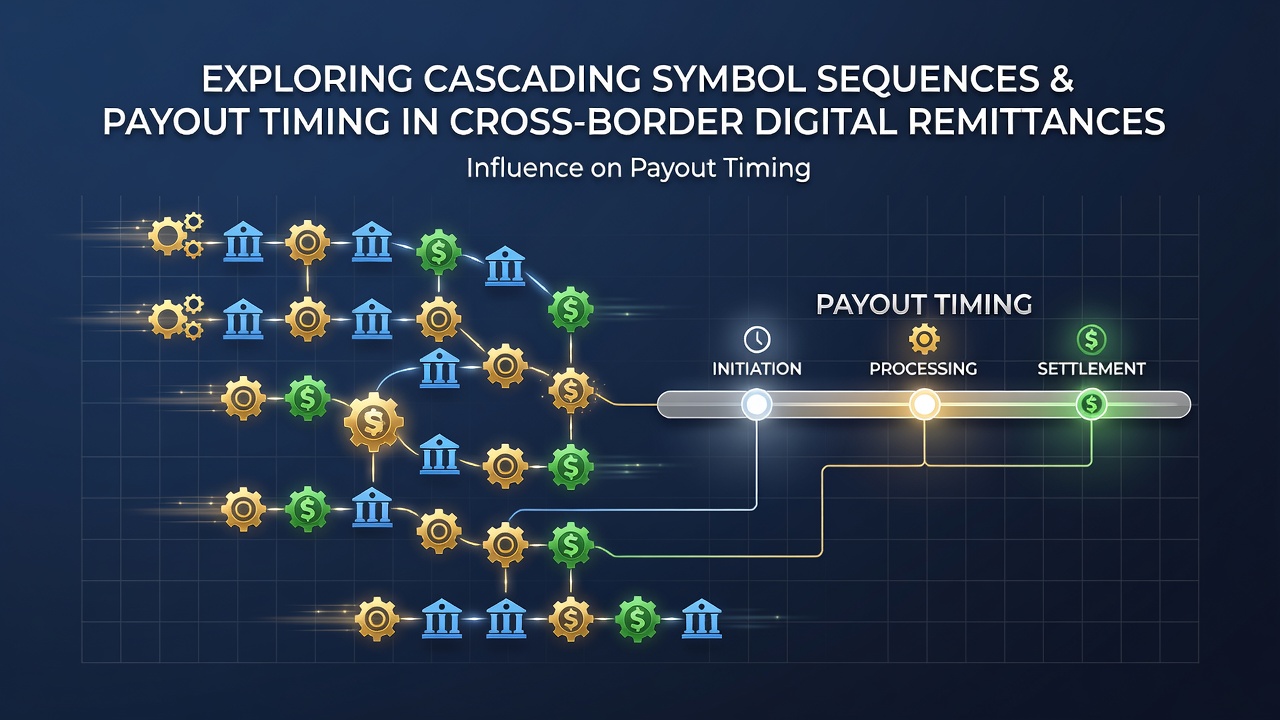
Payout timing shifts when cascades span multiple stages because each stage requires independent validation against the game's ruleset before the next replacement occurs. Studies of digital reel platforms indicate that average session duration increases by 12 to 18 percent when cascade frequency rises above baseline levels, since players remain engaged through extended sequences. Network operators adjust server response thresholds accordingly, particularly when traffic routes through hubs located in separate regulatory zones.
Cross-border connections introduce additional variables such as regional data routing speeds and compliance checkpoints that inspect each transaction. Figures from industry reports reveal that jurisdictions with stricter real-time reporting requirements add processing layers that can postpone final payout confirmation by up to two seconds compared with less regulated corridors. Consequently, developers embed buffering mechanisms that queue cascade results locally before transmitting aggregated totals to central ledgers.
Regional Variations and June 2026 Developments
Regulatory bodies in different regions approach cascade verification at varying speeds. The Pennsylvania Gaming Control Board requires timestamped logs for every cascade stage, whereas Canadian provincial frameworks emphasize aggregate reporting at the close of each session. These differences mean that identical symbol sequences can produce divergent payout confirmation windows depending on the player's registered location.
In June 2026, several networks implemented updated synchronization standards that reduced average cross-border latency during cascade events by roughly 15 percent. Observers tracking these changes note that the adjustments stemmed from coordinated testing between operators in North America and Europe, which aligned verification protocols without altering core game mathematics. The result appears in shorter intervals between the final symbol drop and credit display, especially on platforms handling high volumes of international traffic.
Technical Factors Affecting Sequence Duration
Hardware configurations at edge servers influence how quickly replacements render after each cascade clears. Faster processors complete symbol fall animations and rule checks in fewer clock cycles, which shortens the visible gap between stages. Software optimizations further compress these intervals by pre-loading probable replacement sets based on historical pattern data collected across regions.
Bandwidth allocation also plays a role because high-definition symbol animations consume additional data packets that must traverse international lines. When congestion occurs, some networks temporarily reduce animation fidelity to maintain consistent payout timing, and players experience smoother sequences as a result. Research conducted by academic teams at the University of Nevada, Reno, has documented these trade-offs in controlled environments that simulate real-world routing conditions.
Conclusion
Cascading symbol sequences continue to define payout timing across cross-border digital reel networks through layered verification steps and regional compliance requirements. As synchronization standards evolve and hardware improves, the intervals between cascade completion and credit allocation shorten while maintaining accuracy. Those who study these systems recognize that teh interplay between mechanics, network architecture, and regulatory frameworks determines the precise rhythm of each payout event.